
The assumption that a primary diagnosis represents the definitive conclusion of a clinical journey often overlooks the profound complexity inherent in neurological pathophysiology. If you're currently managing persistent symptoms despite adhering to a prescribed treatment plan, or if you're facing the significant anxiety associated with impending invasive neurosurgery, you aren't alone in your search for absolute diagnostic certainty. Many patients find themselves navigating a fragmented landscape of conflicting test results and unresolved pain, wondering if a more precise or less invasive path exists. Securing a formal neurology second opinion provides a critical opportunity to subject your case to rigorous academic scrutiny and bridge the gap between standard clinical care and advanced diagnostic excellence.
It's natural to seek a higher level of validation before committing to life-altering procedures or long-term medication protocols. This article explores how a meticulous, expert-led review can offer the academic-level clarity you require while identifying sophisticated interventional or regenerative treatment options that may have been previously overlooked. We'll examine the clinical value of integrating clinical neurophysiology with modern interventional medicine to ensure your treatment trajectory is both accurate and grounded in the latest evidence-based methodologies.
Key Takeaways
- Identify the critical clinical indicators, such as diagnostic uncertainty or unresolved symptoms, that necessitate a high-level synthesis of your medical data for a more accurate diagnosis.
- Learn how the integration of advanced Clinical Neurophysiology Testing and specialized sleep medicine services can uncover complex neurological comorbidities often missed in routine primary care.
- Gain academic-level clarity through a neurology second opinion that evaluates the efficacy of advanced regenerative medicine as a non-surgical alternative for spine and joint disorders.
- Understand the methodical framework of a specialized tele-medicine consultation, which ensures a comprehensive and authoritative review of your diagnostic imaging and clinical history from any location.
- Leverage the professional insights of a dual board-certified specialist to achieve peace of mind and identify the most effective interventional pathways for your specific neurological condition.
The Clinical Indications for Seeking a Neurology Second Opinion
A formal medical second opinion within the neurological discipline serves as a high-level clinical synthesis of existing medical data, designed to reconcile complex diagnostic discrepancies. It's not a redundant exercise in repetition but rather an authoritative re-evaluation of a patient's entire clinical history, imaging, and previous laboratory findings. This process is particularly vital when a primary diagnosis fails to explain the full spectrum of a patient's neurological dysfunction. The goal is clarity. By subjecting previous findings to rigorous academic scrutiny, a specialist can identify subtle misinterpretations that may have led to an incomplete or inaccurate treatment plan.
Diagnostic uncertainty remains the primary clinical indication for seeking a specialist re-evaluation. When symptoms persist despite strict adherence to a primary treatment plan, or when the suspected condition is exceptionally rare, the expertise of a dual board-certified specialist becomes indispensable. A comprehensive neurology second opinion provides the academic rigor necessary to validate or refine an existing diagnosis, ensuring that the patient's therapeutic path is grounded in scientific precision. It's about ensuring accuracy before proceeding with life-altering medical decisions.
Diagnostic Ambiguity in Chronic Neurology
Chronic neurological conditions often present with "invisible" symptoms, such as intractable nerve pain or subtle cognitive shifts, which may not be fully captured by standard imaging protocols. In these instances, a detailed re-evaluation of Clinical Neurophysiology Testing results is required to identify hidden patterns of demyelination or axonal loss that were previously overlooked. Diagnostic ambiguity is the discrepancy between patient symptoms and standard test interpretations. By scrutinizing these nuanced data points, a specialist can provide the clarity needed to move beyond symptomatic management toward targeted treatment. You're looking for answers that traditional tests might have missed.
Surgical Prophylaxis: The Value of a Non-Surgical Perspective
Before committing to invasive neurosurgery, it's clinically prudent to determine if all avenues of Interventional Pain Medicine have been fully exhausted. A neurology second opinion acts as a form of surgical prophylaxis, evaluating the potential for non-invasive interventional or regenerative medicine pathways that might mitigate the risks associated with spinal procedures. This holistic review frequently integrates Sleep Medicine Services to rule out systemic causes of neurological fatigue or pain amplification. It's about ensuring that surgery is the absolute last resort, rather than a premature intervention. Protecting your long-term neurological health requires exploring every advanced, non-surgical option available in modern medicine.
Advanced Diagnostic Modalities in Neurological Re-evaluation
Achieving diagnostic precision in complex cases requires more than just a cursory review of existing records; it demands a sophisticated synthesis of advanced diagnostic modalities that many general practices may not be equipped to perform. A comprehensive neurology second opinion leverages over 21 years of specialized international experience to scrutinize the intersection of neurological dysfunction and interventional pain medicine. This academic-level re-evaluation is essential for identifying subtle spine and joint pathologies that frequently masquerade as generalized neurological disorders. By applying a meticulous lens to every data point, a specialist can discern the root cause of persistent symptoms that have eluded previous practitioners. If you're seeking this level of clinical depth, a neurology second opinion can provide the necessary framework for a more effective treatment plan.
The diagnostic process often involves a multi-layered approach to ensure no detail is overlooked. This includes:
- High-fidelity interpretation of nerve integrity through specialized electrodiagnostic protocols.
- Meticulous review of high-resolution neuroimaging to detect micro-instabilities in the spine or joints.
- Evaluation of systemic physiological factors, including sleep architecture, that may be amplifying neurological pain signals.
The Role of Clinical Neurophysiology
Clinical Neurophysiology Testing, specifically Electromyography (EMG) and Nerve Conduction Studies (NCS), serves as the definitive standard for confirming peripheral neuropathy and radiculopathy. These studies aren't merely technical procedures. They're diagnostic tools that require board-certified interpretation to differentiate between referred pain from the spine and localized nerve entrapment. By precisely mapping nerve function, a specialist can link electrodiagnostic findings to specific interventional pain medicine strategies. This ensures that treatments like nerve blocks or regenerative injections are targeted with anatomical precision, rather than applied as broad, symptomatic relief.
Sleep Dynamics and Neurological Health
Neurological health is inextricably linked to sleep architecture, yet sleep medicine services are often underutilized in the diagnostic process for chronic pain and neurodegeneration. Identifying REM sleep behavior disorder, for instance, can serve as a critical early indicator of underlying neurodegenerative processes that might otherwise remain undetected for years. Additionally, untreated sleep apnea significantly hinders neurological recovery and exacerbates chronic pain syndromes. A thorough second opinion framework integrates these sleep studies to provide a holistic view of the patient’s health, ensuring that systemic issues aren't being overlooked in favor of localized symptoms. It's a vital step in moving beyond a narrow diagnostic focus toward a comprehensive understanding of the patient's neurological well-being.
Comparing Traditional Interventions with Regenerative Medicine
While conventional clinical protocols often rely on corticosteroid injections to suppress inflammatory markers, these interventions frequently fail to address the underlying structural degradation of the spine and joints. A comprehensive neurology second opinion allows for a meticulous evaluation of whether a patient has transitioned from a state of acute inflammation to chronic degenerative pathology, where regenerative medicine may offer a superior therapeutic trajectory. Unlike traditional steroids, which may lead to localized tissue catabolism over time, advanced regenerative biological therapies focus on the restoration of tissue integrity. This shift from symptomatic suppression to biocellular repair is critical for patients seeking long-term functional recovery without the risks associated with repetitive pharmacological interventions.
Determining the optimal "clinical window" for non-surgical regenerative interventions is a complex task that requires the synthesis of neurological data and interventional pain medicine principles. If a patient waits until structural damage is irreversible, the efficacy of regenerative medicine diminishes significantly. By analyzing the intersection of radicular symptoms and joint instability early in the diagnostic process, a specialist can identify the precise moment when regenerative therapies are most likely to succeed. This proactive approach ensures that patients don't remain trapped in a cycle of failed conservative care while their condition progresses toward a surgical necessity.
- Regenerative therapies utilize autologous or evidence-based biological agents to stimulate localized healing.
- Interventional pain medicine provides the precision delivery required to target damaged spinal structures.
- Meticulous patient selection is the cornerstone of successful regenerative outcomes in neurology.
Regenerative Approaches to Spine Disorders
Evidence-based applications of regenerative medicine have shown significant promise in treating herniated discs and facet joint pain by promoting tissue repair rather than merely masking neurological symptoms. Candidates for regenerative spine care are typically those with identifiable discogenic pain or joint instability who haven't yet developed severe myelopathy. By leveraging a neurology second opinion, patients can confirm if their spinal pathology is suitable for these advanced biological treatments, potentially avoiding the morbidity of open neurosurgery. It's a scholarly approach to spine health that prioritizes the preservation of natural anatomy.
Interventional Pain Modalities for Nerve Pain
For conditions like postherpetic neuralgia or complex regional pain, specialized clinical care through nerve blocks offers a targeted alternative to systemic medications. Interventional pain medicine focuses on precise nerve targeting to disrupt pain pathways without systemic side effects. This precision allows for the management of intractable nerve pain in patients who aren't suitable surgical candidates. By differentiating between those who require mechanical decompression and those who benefit from neural blockade, specialists can tailor a treatment plan that addresses the specific pathophysiology of the patient's pain, ensuring a higher degree of diagnostic and therapeutic accuracy.
The Framework of a Specialized Tele-medicine Consultation
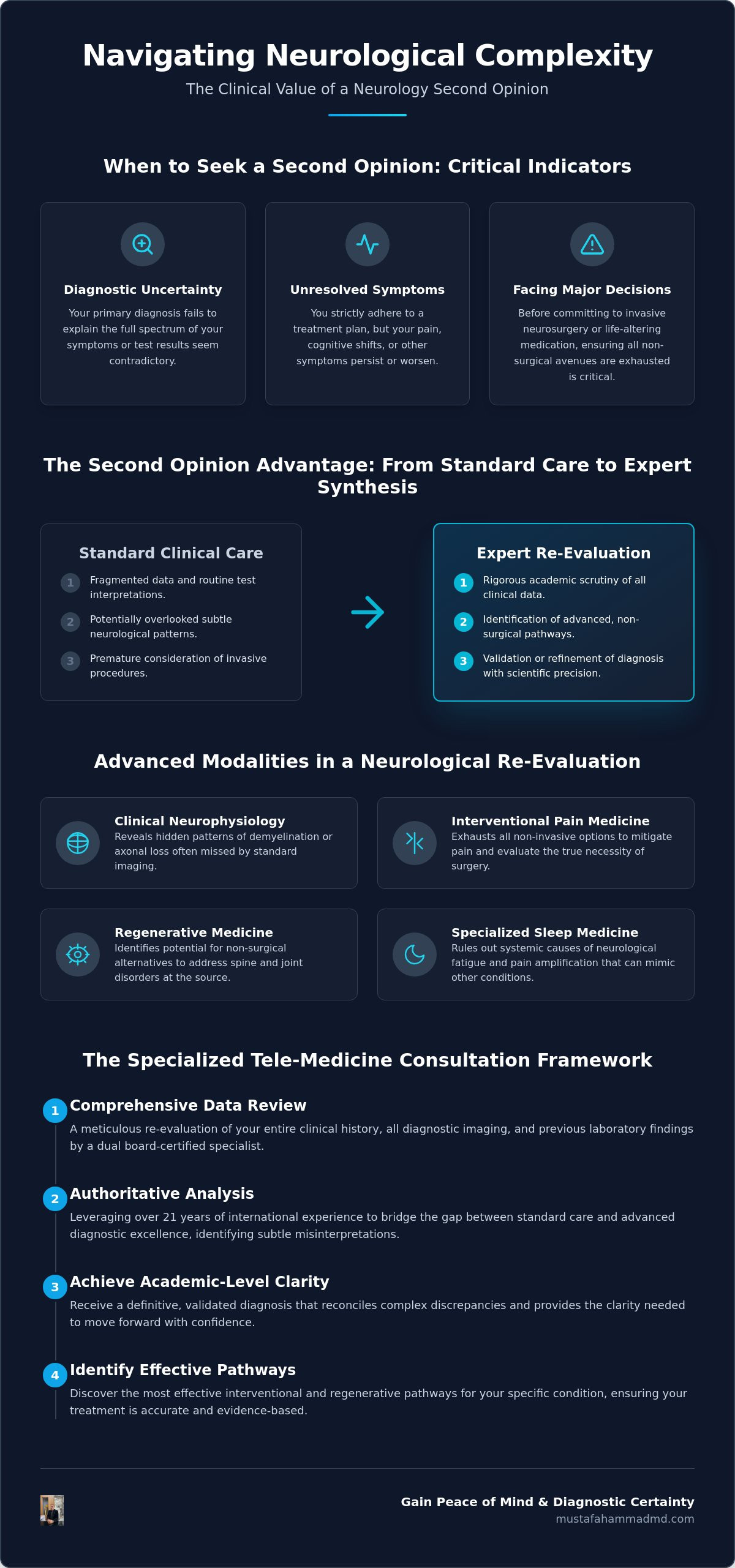
Within the contemporary clinical environment, the framework of a specialized tele-medicine consultation for a neurology second opinion has evolved into a highly structured academic exercise that transcends the limitations of traditional remote care. This process commences with an exhaustive clinical intake, where every facet of the patient's medical history, previous diagnostic imaging, and longitudinal symptom progression is subjected to a rigorous review. Unlike standardized virtual visits, this methodology prioritizes the synthesis of multi-disciplinary data, specifically evaluating the complex intersection of neurology, interventional pain medicine, and sleep physiology. It's a methodical approach designed to ensure that no diagnostic detail is overlooked due to geographic constraints.
The virtual consultation itself serves as a high-level academic discussion, providing patients with a direct channel to a distinguished expert to review findings and explore proposed interventional pathways in real time. This isn't merely a delivery of a written report; it's an interactive clinical synthesis where the specialist explains the rationale behind diagnostic refinements. The culmination of this process is the delivery of actionable reporting, which provides a detailed diagnostic roadmap for both the patient and their local care team to follow. If you're ready to secure this level of diagnostic depth, you can schedule a comprehensive neurology second opinion to begin your clinical re-evaluation.
Tele-medicine Efficacy in Modern Neurology
Geographic barriers no longer preclude patients from accessing board-certified neurological expertise of the highest caliber. Tele-medicine Consultations offer a robust platform for the continuous monitoring of chronic spine disorders, ensuring that therapeutic adjustments are made with clinical precision. These evaluations adhere to the most stringent clinical standards and security protocols, maintaining the integrity of the physician-patient relationship across international borders. For patients traveling or relocating to the UAE for specialized care, Goodhand provides a comprehensive checklist for residency medical tests to streamline administrative health requirements. It's a secure, evidence-based model that brings elite medical consultation directly to the patient's environment, ensuring continuity of care without the burden of extensive travel.
Preparation for a Specialist Consultation
To ensure the maximum utility of the consultation, patients must provide comprehensive documentation, including high-resolution imaging (MRI/CT), previous EMG/NCS results, and a complete medication history. Formulating specific clinical questions regarding diagnostic clarity or interventional options is essential for a productive session. For those seeking The Efficacy of Tele-medicine for Neurological Care, understanding the technical nuances of remote evaluation is a prerequisite for informed participation. Having these records organized allows the specialist to focus on the high-level synthesis of your data rather than administrative retrieval. Meticulous preparation is the cornerstone of a successful clinical outcome in the virtual space.
Expert Neurological Advocacy with Dr. Mustafa Hammad
Seeking a neurology second opinion from a dual board-certified specialist provides a unique clinical advantage that traditional, siloed practices often cannot replicate. Mustafa Hammad MD's practice is built upon a relentless commitment to clinical excellence that's backed by over 21 years of rigorous international medical experience in both neurology and interventional pain medicine. By integrating these specialized disciplines, he offers a comprehensive perspective that addresses the neural pathways of pain alongside the structural integrity of the nervous system. This approach, often referred to as the "Hammad Center" methodology, prioritizes the integration of regenerative medicine into traditional neurological care to achieve non-surgical clinical outcomes that were previously thought unattainable. It's a vital bridge between the latest academic research and the practical, day-to-day management of complex spine and joint disorders.
The clinical value of this advocacy lies in the ability to synthesize data from multiple sub-specialties to form a single, cohesive diagnostic conclusion. Patients who've navigated years of fragmented care find that a unified review of their neurophysiology, sleep architecture, and interventional history often reveals the missing link in their treatment. Mustafa Hammad MD's expertise ensures that every diagnostic refinement is grounded in scientific precision, providing a level of authoritative insight that's essential for resolving cases characterized by persistent diagnostic ambiguity or failed conservative management.
Just as medical precision is vital for patient outcomes, maintaining high standards of professional accountability is essential for healthcare organizations and businesses alike; for instance, Bin Hamad Mathew Joseph and Associates Chartered Accountants provides the specialized auditing and accounting services required to ensure institutional integrity and transparency.
A Legacy of Clinical Prestige
Mustafa Hammad MD's role as the President of The American Medical Institute further solidifies his standing as a distinguished global expert whose insights are sought after for the resolution of the most complex neurological cases. This position reflects a career dedicated to the highest tiers of professional validation and a commitment to evidence-based methodologies in every second opinion provided. Consulting with a specialist of this caliber ensures that your case is subjected to the same level of academic scrutiny found in leading research institutions. It's a high-level review that values clinical truth over procedural convenience, offering patients a path to reassurance through established medical excellence.
Initiating Your Path to Diagnostic Clarity
The transition from diagnostic uncertainty to a structured, effective treatment plan begins with a shift in the patient's role from a passive recipient of care to an active participant in the medical decision-making process. By providing the academic-level clarity discussed throughout this article, Mustafa Hammad MD empowers patients to understand the physiological basis of their symptoms and the rationale behind proposed interventional strategies. Whether you're seeking to avoid invasive surgery or simply require validation of a rare condition, the path to peace of mind is paved with authoritative expertise and a meticulous pursuit of diagnostic accuracy. You don't have to remain in a state of clinical confusion when advanced diagnostic pathways are available.
Schedule a comprehensive neurology second opinion with Mustafa Hammad MD to finalize your diagnostic journey and explore advanced pathways toward recovery.
Advancing Toward Diagnostic Resolution and Therapeutic Precision
Achieving a definitive diagnosis in the presence of complex neurological symptoms requires a departure from standard clinical paradigms in favor of a more rigorous, academic-level re-evaluation. By synthesizing findings from clinical neurophysiology and sleep medicine with advanced interventional strategies, patients can move beyond the limitations of persistent diagnostic ambiguity. This article has demonstrated that a meticulous neurology second opinion serves as the essential catalyst for identifying non-surgical treatment pathways, particularly through the application of regenerative medicine for degenerative spine and joint disorders. It's a structured approach that prioritizes long-term functional integrity over temporary symptomatic relief.
Dr. Mustafa Hammad, a dual board-certified specialist in Neurology and Interventional Pain Medicine with over 21 years of elite clinical experience, provides the authoritative advocacy necessary to navigate these intricate medical decisions. As the President of The American Medical Institute, his commitment to evidence-based methodologies ensures that every consultation is grounded in the highest standards of medical excellence. You're invited to Request a Specialized Neurology Second Opinion from Dr. Mustafa Hammad to establish a clear, scientifically validated roadmap for your recovery. It's time to secure the clarity you deserve and embrace a future defined by clinical certainty and restored functional well-being.
Frequently Asked Questions
What is the primary difference between a general neurology consultation and a second opinion?
The primary distinction lies in the depth of clinical synthesis; a general consultation establishes a baseline diagnostic framework, whereas a second opinion involves an academic re-evaluation of existing medical data. It's a high-level review designed to reconcile diagnostic discrepancies or validate complex treatment plans. While a primary visit focuses on initial symptom management, the neurology second opinion subjects previous findings to rigorous scrutiny to ensure absolute diagnostic accuracy.
Can a neurology second opinion be conducted entirely through tele-medicine?
Yes, a specialized second opinion can be conducted through tele-medicine consultations, provided that all relevant diagnostic imaging and test results are accessible for digital review. Virtual platforms allow for a high-level academic discussion of your case with a global expert regardless of your physical location. This model is particularly effective for reviewing spine disorders and joint pathologies where the initial physical examination has already been documented by a local clinical provider.
When is the best time to seek a second opinion for a spine disorder?
The optimal time to seek an expert re-evaluation for a spine disorder is before committing to invasive neurosurgery or when symptoms persist despite following a primary treatment plan. Early intervention allows a specialist to evaluate if you're within the clinical window for non-surgical interventional or regenerative medicine options. It's a proactive step to ensure that all conservative and interventional avenues have been fully exhausted before considering surgical intervention.
Does a second opinion usually result in a different diagnosis?
A second opinion doesn't always result in a different diagnosis; however, it frequently leads to a more refined or comprehensive understanding of the underlying neurological pathology. In many cases, the value lies in validating the current diagnosis or identifying advanced interventional treatment pathways that weren't previously considered by the primary care team. This process provides the academic-level clarity and peace of mind necessary to proceed with a complex medical plan.
What medical records are required for a comprehensive neurological re-evaluation?
A comprehensive re-evaluation requires a complete set of medical records, including high-resolution imaging such as MRI or CT scans, previous Clinical Neurophysiology Testing results, and a detailed medication history. Laboratory findings and clinical notes from previous specialist consultations are also essential for a thorough synthesis of your history. Having these documents organized ensures the specialist can focus on the technical intersection of your data rather than administrative retrieval.
How does interventional pain medicine differ from traditional pain management in a second opinion?
Interventional pain medicine focuses on precise nerve targeting to disrupt pain pathways at their source, whereas traditional pain management often relies on broad symptomatic relief or systemic pharmacological interventions. In the context of a neurology second opinion, interventional strategies are evaluated as targeted, non-surgical alternatives. This precision allows for the management of chronic sciatica or postherpetic neuralgia with significantly fewer systemic side effects than traditional medication protocols.
Is regenerative medicine a standard part of a neurology second opinion?
Regenerative medicine is not a mandatory component of every consultation, but it's evaluated as a sophisticated alternative for patients with specific spine and joint disorders. A specialist determines if you're a suitable candidate for biological therapies that promote tissue repair rather than just masking neurological symptoms. This assessment is a key part of exploring advanced, non-surgical pathways during a high-level neurological re-evaluation of your clinical case.
How long does it typically take to receive a finalized second opinion report?
The timeline for receiving a finalized report varies based on the complexity of the case and the volume of medical data that requires synthesis. While some preliminary findings are discussed during the virtual consultation, the detailed diagnostic roadmap is typically delivered after a meticulous review of all imaging and neurophysiology results. This methodical approach ensures that the final recommendations are grounded in scientific precision rather than a rushed clinical assessment.