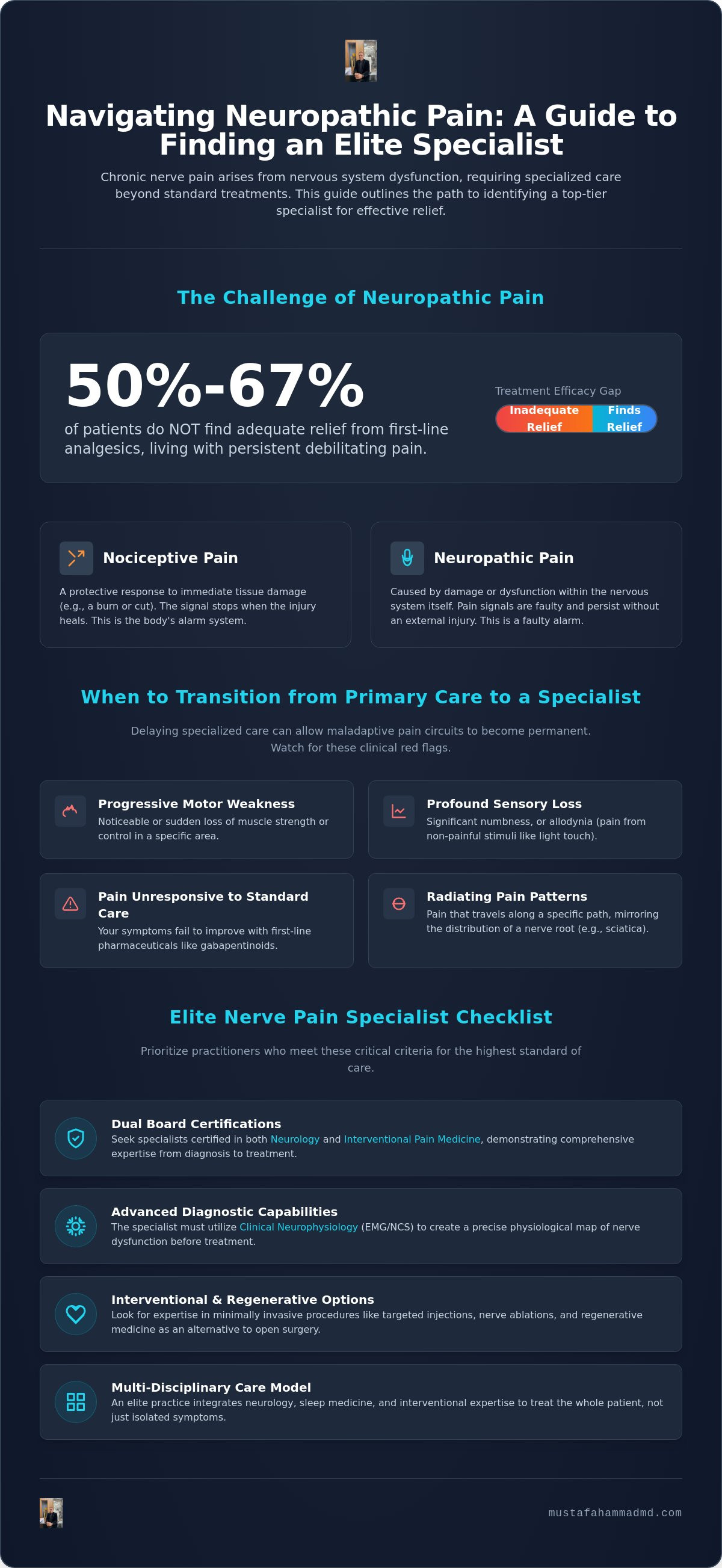
Did you know that only 33% to 50% of patients grappling with neuropathic pain find relief through standard first-line analgesics, leaving more than half the population to endure persistent, debilitating shooting or burning sensations? If you're currently managing chronic discomfort that feels resistant to conventional care, you've likely experienced the profound frustration of surface-level diagnoses that fail to pinpoint a precise physiological cause. It's understandable that you might feel significant anxiety regarding invasive surgical options; however, you shouldn't have to settle for inadequate symptom management when advanced, minimally invasive interventional procedures are available.
This authoritative guide serves as a clinical resource to help you identify a distinguished nerve pain specialist near me who bridges the gap between the diagnostic rigor of neurology and the procedural precision of interventional medicine. You'll gain a comprehensive understanding of the credentials that define an elite specialist, including global academic prestige and board certifications in multiple disciplines like Clinical Neurophysiology and Regenerative Medicine. We'll explore how modern innovations, such as the 2026 FDA-cleared systems for basivertebral nerve ablation, allow for targeted treatment without the risks of open neurosurgery, ensuring your path to recovery is built on a foundation of scientific excellence and rigorous medical standards.
Key Takeaways
- Differentiate between standard nociceptive discomfort and the complex signaling errors inherent in chronic neuropathy to ensure that your clinical path directly addresses the underlying nervous system dysfunction.
- Identify an elite nerve pain specialist near me by prioritizing practitioners who maintain dual board certifications in Neurology and Interventional Pain Medicine while demonstrating a distinguished twenty-year clinical trajectory.
- Recognize the diagnostic imperative of Clinical Neurophysiology, where the utilization of EMG and Nerve Conduction Studies establishes an evidence-based physiological map for a precise treatment plan.
- Investigate sophisticated interventional and regenerative medicine options that provide localized relief through targeted injections, offering a clinically advanced alternative to invasive surgical procedures.
- Evaluate the strategic advantages of a multi-disciplinary care model that integrates neurology, sleep medicine, and interventional expertise under the guidance of a globally recognized authority.
Defining the Scope of Neuropathic Pain and Specialist Intervention
Neuropathic pain is defined as a primary clinical dysfunction of the somatosensory nervous system, characterized by maladaptive signaling that persists long after the initial physical insult has resolved. Unlike nociceptive pain, which serves as a protective physiological response to external tissue damage, neuropathic pain arises from intrinsic pathology within the nerves themselves. This distinction is vital for patients seeking a nerve pain specialist near me, as the treatment for a broken bone or muscle strain differs fundamentally from the management of aberrant electrical impulses. While general practitioners provide essential broad-spectrum care, they often lack the specialized diagnostic equipment and neuro-interventional training required to address the high-fidelity signaling errors found in conditions such as trigeminal neuralgia, sciatica, or complex peripheral neuropathy. In cases of persistent facial pain, it is often advisable to read more about how a comprehensive dental exam can help rule out oral health causes. These conditions represent a failure of the nervous system's internal communication; they require a specialist's eye to decode the specific nerve fibers involved.
The Pathophysiology of Chronic Nerve Signaling
The etiology of chronic nerve signaling typically involves structural damage or metabolic alterations resulting from traumatic injury, chronic inflammation, or metabolic disturbances like diabetes. When these nerves are compromised, they may develop a state of hyper-excitability, leading to central sensitization, where the central nervous system maintains a heightened state of reactivity even in the absence of a peripheral stimulus. This phenomenon causes the brain to interpret non-painful stimuli as agonizing, a process that complicates long-term management if not addressed through precision interventional techniques. Derived from the Greek neuron meaning nerve and pathos meaning suffering or disease, neuropathy represents a broad spectrum of clinical conditions where the nervous system's architecture is fundamentally altered.
When to Transition from Primary Care to a Specialist
Recognizing the necessity of a specialist is a critical step in preserving long-term neurological health, particularly when symptoms progress beyond intermittent discomfort. Red flags that demand immediate consultation with a nerve pain specialist near me include progressive motor weakness, significant sensory loss, or intractable pain that disrupts nocturnal sleep patterns. Clinical indicators requiring elite consultation include:
- Focal motor deficits or sudden loss of muscle strength.
- Profound sensory disturbances such as allodynia or anesthesia.
- Symptoms that fail to respond to standard first-line pharmaceutical protocols.
- Radiating pain that mirrors the dermatomal distribution of specific nerve roots.
While primary care settings frequently rely on standard gabapentinoids or antidepressants, these pharmacological approaches often fail to address the underlying nerve compression or inflammatory source. Standard analgesics don't provide the precision required for complex signaling errors, often leaving patients in a cycle of escalating dosages without relief. Early intervention by an interventional neurologist is paramount to prevent permanent nerve degradation; delaying specialized care can allow maladaptive pain circuits to become permanently entrenched in the brain's architecture, making future resolution significantly more challenging.
Critical Criteria for Selecting a Board-Certified Nerve Pain Specialist
Selecting a clinician for the resolution of neuropathic distress requires more than a cursory search for a nerve pain specialist near me; it demands a rigorous evaluation of the practitioner’s academic pedigree and clinical scope. While many clinics offer symptomatic relief, a distinguished specialist possesses dual board certifications in both Neurology and Interventional Pain Medicine, ensuring that every procedure is preceded by a profound understanding of neural architecture. This dual-specialty approach allows the physician to transition seamlessly from complex neuro-diagnostic mapping to high-precision interventional techniques, a combination that significantly reduces the risk of misdiagnosis or procedural failure. By integrating the diagnostic rigor of a neurologist with the technical dexterity of an interventionalist, patients receive a level of care that transcends the limitations of traditional, single-discipline practices.
The Value of Dual-Specialty Certification
A neurologist’s diagnostic lens provides an unparalleled advantage when identifying the exact origin of a patient's suffering, especially in cases where spine or joint disorders mimic other neurological conditions. By adhering to the rigorous standards of American board certifications, a specialist demonstrates a commitment to the highest tiers of medical validation, distinguishing their practice from traditional pain management facilities that may lack deep neurological insight. This "Neurologist-Interventionalist" model ensures that treatments like nerve blocks or targeted injections aren't merely applied as broad interventions but are instead directed with microscopic precision based on the latest clinical neurophysiology findings. For those seeking a definitive path forward, a comprehensive neurology consultation provides the necessary clarity to move from uncertainty to a structured recovery plan.
Assessing Clinical Longevity and Global Expertise
Clinical longevity is an essential metric of expertise, as a trajectory spanning over 21 years allows a specialist to encounter and successfully manage rare neurological conditions that younger practitioners might overlook. A specialist who maintains a global perspective on medical innovation brings a wealth of international experience to their local practice, often incorporating evidence-based methodologies that have been validated in elite academic circles worldwide. When evaluating a nerve pain specialist near me, patients should consider the breadth of the specialist's contributions to the field. It is advisable to ask specific questions regarding their procedural volume and their experience with advanced outpatient clinical neurophysiology, such as EMG and Nerve Conduction Studies. Key considerations for evaluating a specialist include:
- Verification of active board certifications in multiple relevant sub-specialties.
- A documented history of treating complex spine and joint-related nerve disorders.
- Access to advanced diagnostic technologies within an outpatient clinical setting.
- A clinical philosophy that prioritizes minimally invasive interventional pathways over open surgery.
Ultimately, the goal is to establish a partnership with a clinician whose authority is derived from a lifetime of elite education and a proven record of clinical excellence. This high level of professional validation ensures that the patient isn't just another case number, but a recipient of meticulously tailored, evidence-based care.
The Diagnostic Imperative: Utilizing Clinical Neurophysiology for Precision
Establishing an evidence-based diagnosis for chronic neuropathy requires a transition from traditional symptomatic observation to the rigorous application of Clinical Neurophysiology. When searching for a distinguished nerve pain specialist near me, it's vital to recognize that the cornerstone of effective treatment isn't merely the identification of pain, but the precise mapping of neural dysfunction through sophisticated electrodiagnostic modalities. While a magnetic resonance imaging (MRI) scan provides a high-resolution visualization of anatomical structures, it remains fundamentally incapable of assessing the dynamic electrical signaling or the functional integrity of the peripheral nerves themselves. By utilizing advanced neurophysiological testing, a specialist can differentiate between a primary nerve lesion and a secondary muscular pathology, ensuring that the subsequent interventional plan is directed with absolute physiological certainty. This level of diagnostic precision directly dictates the success rate of minimally invasive procedures, as it allows the clinician to target the exact site of neural distress rather than relying on generalized anatomical landmarks.
Functional Testing: EMG and Nerve Conduction Studies
The clinical application of Electromyography (EMG) and Nerve Conduction Studies (NCS) represents the gold standard for evaluating the peripheral nervous system's functional status. During these procedures, the specialist carefully assesses the electrical activity within specific muscle groups and measures the velocity and amplitude of electrical signals as they traverse the nerve pathways. This detailed analysis allows for the exact localization of nerve entrapments, lesions, or demyelinating processes that may be contributing to a patient's debilitating symptoms. By identifying whether a nerve is suffering from axonal loss or a conduction block, the physician can tailor a regenerative or interventional strategy that addresses the specific biological failure. This data-driven approach ensures that your choice of a nerve pain specialist near me is based on a commitment to diagnostic excellence rather than a reliance on surface-level evaluations.
Clinical Indications for Specialized Second Opinions
Seeking a specialized second opinion is a critical step for patients who have experienced persistent spine or joint pain that has proven refractory to initial treatments. A fresh neurological perspective often uncovers previously missed radiculopathies or peripheral nerve pathologies that may have been obscured by more visible structural abnormalities on an MRI. For patients residing outside immediate clinical vicinities, the availability of Tele-medicine Consultations allows for a preliminary diagnostic review and the facilitation of elite second opinions without the necessity of immediate travel. This remote access ensures that global academic prestige and interventional expertise are accessible to those who require a sophisticated re-evaluation of their clinical trajectory. Key indicators for pursuing a specialized second opinion include:
- Persistent symptoms following a standard spinal or joint surgical intervention.
- Inconclusive results from initial diagnostic imaging or basic neurological exams.
- A desire to explore non-surgical, interventional pathways before committing to invasive procedures.
- Complex clinical presentations where pain signaling appears disconnected from visible structural damage.
By integrating these advanced diagnostic pillars, a dedicated specialist ensures that every patient's journey toward restoration is anchored in objective, scientific data.
Advanced Interventional and Regenerative Pathways for Nerve Restoration
The progression of modern medicine has facilitated a decisive shift away from systemic pharmacological suppression toward localized, precision-based interventions that address the root of neural dysfunction. For individuals conducting a search for a nerve pain specialist near me, it's frequently the objective to identify a clinician capable of delivering high-efficacy results without the debilitating side effects of oral medications or the prolonged recovery periods inherent in invasive surgery. Interventional Pain Medicine serves as this critical bridge, utilizing advanced imaging guidance to deliver therapeutic agents directly to the compromised nerve or joint structure. By focusing on the specific anatomical site of the lesion, these modalities offer a level of relief that's often unattainable through traditional conservative management, particularly in cases where chronic inflammation or structural compression has become refractory to standard care.
This commitment to precision is shared by specialized centers like Sapphire Clinics, which provide highly specialized medical assessments to ensure that patients living with long-term pain receive a diagnosis tailored to their specific neurological needs.
Precision Interventions: Nerve Blocks and Radiofrequency
Precision interventions, such as diagnostic and therapeutic nerve blocks, operate by temporarily interrupting the transmission of pain signals from the peripheral nervous system to the brain, providing both immediate symptomatic relief and essential diagnostic data. When a nerve pain specialist near me utilizes radiofrequency ablation, they employ controlled thermal energy to create a localized lesion on the target nerve, effectively silencing the aberrant signaling for an extended duration. These outpatient procedures are characterized by their minimal downtime and high safety profile, making them exceptionally effective for managing conditions like sciatica or facet joint syndrome. Because these methods don't just mask symptoms but target the physiological source of distress, patients often experience a rapid restoration of their daily functional capacity and a significant improvement in their overall quality of life.
The Role of Regenerative Medicine in Neurological Care
Regenerative Medicine represents the vanguard of neurological restoration, offering a biological approach to healing musculoskeletal structures that contribute to chronic nerve irritation. By utilizing evidence-based therapies such as platelet-rich plasma or other cellular-based treatments, a specialist can support the body's innate ability to repair damaged discs, ligaments, and joint capsules that frequently impinge upon neural pathways. This academic and clinical integration of regenerative techniques into spine care allows for a more holistic resolution of pain, moving beyond simple signal suppression toward actual tissue stabilization. For patients seeking the highest tier of evidence-based innovation, exploring Regenerative Medicine options provides a sophisticated pathway toward long-term recovery. Maintaining a clinical partnership with a physician who stays at the forefront of these medical advancements ensures that your treatment plan incorporates the most current, peer-reviewed methodologies available in the global medical community.
Establishing a Clinical Partnership with Mustafa Hammad MD
Dr. Mustafa Hammad represents the pinnacle of interventional neurology, bringing over 21 years of board-certified experience to a practice defined by academic rigor and clinical excellence. His background includes multiple American board certifications, establishing him as a premier choice for those seeking a distinguished nerve pain specialist near me. The practice operates as a unified center of medical authority, integrating Neurology Consultations, Sleep Medicine Services, and Interventional Pain Medicine within a single, state-of-the-art outpatient environment. This unique clinical model eliminates the fragmented care often found in larger hospital systems, allowing for a seamless, rapid transition from diagnostic neurophysiology to targeted interventional treatment. By consolidating these high-level specialties, the practice ensures that every facet of a patient's neurological health is addressed with meticulous attention to detail.
A Comprehensive Approach to Neurological and Sleep Health
Chronic nerve pain rarely exists in isolation; it frequently intersects with complex sleep disorders, creating a cycle of physiological stress that significantly hinders the body's natural recovery processes. By addressing the critical intersection of neural signaling and sleep architecture, Dr. Hammad provides a more holistic path to restoration than traditional, single-focus clinics. The practice's internal capacity for Clinical Neurophysiology Testing ensures that every patient's treatment plan is anchored in objective, real-time data, reflecting the high standards of a specialist who leads international medical institutes. This integration of sleep and neurological health is essential for patients whose quality of life is compromised by nocturnal pain, as it allows for the simultaneous management of pain signaling and restorative sleep cycles.
Initiating Your Path to Nerve Pain Relief
The journey toward physiological resolution begins with a comprehensive initial consultation, where Dr. Hammad conducts an exhaustive review of your medical history, previous diagnostic imaging, and current symptomatic presentation. For patients grappling with complex or chronic cases that have proven resistant to standard care, pursuing a second opinion is a vital step in ensuring that no underlying pathology has been overlooked. National and international patients can access this elite expertise through Tele-medicine Consultations, facilitating a sophisticated diagnostic review and second opinion before visiting the physical clinic for interventional procedures. This accessibility ensures that every patient, regardless of their location, can consult with a nerve pain specialist near me who possesses the global experience necessary to manage the most challenging neuropathic conditions. To begin your recovery with a clinician who defines the standard of care in neuropathic restoration, you can schedule a comprehensive neurology consultation with Dr. Mustafa Hammad to establish a definitive path forward.
Advancing Toward a Future of Neural Precision
Identifying a nerve pain specialist near me requires a commitment to clinical excellence that transcends basic symptom management. You've learned that true resolution depends on the diagnostic rigor of a dual-certified neurologist and the application of evidence-based interventional procedures. By prioritizing practitioners with advanced credentials in clinical neurophysiology and regenerative spine care, you can move away from invasive surgical risks toward targeted, minimally invasive restoration. This methodical approach ensures that your treatment plan is anchored in objective data rather than surface-level observation.
As a board-certified Neurologist and Interventional Pain Specialist with over 21 years of elite clinical experience, Dr. Mustafa Hammad bridges the gap between traditional neurology and modern interventional innovation. His specialized expertise in Sleep Medicine and Regenerative Medicine ensures that your recovery is managed with the highest degree of academic prestige and dedicated care. Don't let chronic signaling errors dictate your quality of life when a definitive diagnosis and a sophisticated path to relief are within reach. Consult with a Distinguished Expert: Book Your Neurology Consultation with Dr. Mustafa Hammad. You deserve a clinical partnership built on a foundation of scientific rigor and proven results.
Frequently Asked Questions
How do I know if I should see a neurologist or a pain specialist for my nerve pain?
You'll achieve the most definitive results by consulting a specialist who integrates both disciplines into a single clinical model. A neurologist provides the essential diagnostic rigor to identify the specific nerve fibers involved; conversely, an interventional specialist possesses the technical expertise to perform targeted procedures. Seeking a dual-certified expert ensures your treatment is predicated on an accurate physiological map rather than generalized symptomatic relief.
What is the difference between interventional pain medicine and traditional pain management?
Interventional pain medicine prioritizes minimally invasive procedures that target the precise anatomical source of pain, such as nerve blocks or radiofrequency ablation. This differs from traditional pain management, which often relies on systemic pharmacological interventions or broad-spectrum physical therapies. By utilizing image-guided precision, interventional medicine offers a more localized and effective resolution for refractory neuropathic conditions while minimizing systemic side effects.
Can nerve pain be treated without invasive surgery or long-term opioids?
Modern clinical advancements allow for the successful management of complex neuropathy through non-surgical interventional and regenerative pathways. These methods focus on interrupting aberrant pain signals and supporting structural healing without the risks associated with open neurosurgery or the dependency issues of chronic opioid use. Identifying a nerve pain specialist near me who offers these advanced outpatient modalities is a critical step toward achieving long-term functional restoration.
What exactly happens during a clinical neurophysiology test like an EMG?
During an Electromyography (EMG) and Nerve Conduction Study, the clinician utilizes specialized equipment to record the electrical activity of your muscles and the velocity of signals traversing your nerves. This electrodiagnostic process provides objective data regarding the integrity of the peripheral nervous system, allowing the specialist to locate the exact site of entrapment or lesion. It's a fundamental tool for differentiating between primary nerve damage and secondary musculoskeletal dysfunction.
Is regenerative medicine a viable option for chronic spine and joint disorders?
Regenerative medicine has emerged as a scientifically validated option for stabilizing the musculoskeletal structures that frequently contribute to chronic nerve irritation. By utilizing evidence-based biological therapies, clinicians can support the repair of damaged discs and joint capsules that impinge upon neural pathways. This approach is particularly effective for patients seeking a non-surgical alternative to address the underlying structural failures in spine and joint disorders.
How does sleep medicine relate to the management of chronic nerve pain?
Chronic pain and sleep architecture are inextricably linked through shared neurological pathways, where poor sleep quality can significantly lower pain thresholds and exacerbate neuropathic sensations. Managing sleep disorders is essential for neurological recovery, as restorative sleep provides the physiological environment necessary for nerve repair and inflammatory reduction. A comprehensive treatment plan must address both pain signaling and sleep health to ensure a complete return to wellness.
Can I get a second opinion from a nerve pain specialist via tele-medicine?
Tele-medicine consultations provide a sophisticated platform for patients to receive an elite second opinion on complex neurological cases without the immediate necessity of travel. During these virtual sessions, the specialist reviews your existing diagnostic records, imaging, and clinical history to provide a fresh perspective on your condition. This remote access is invaluable for patients who require the authority of a distinguished expert to validate or refine their current treatment trajectory.
What qualifications should a distinguished nerve pain specialist possess?
A distinguished specialist should ideally maintain dual board certifications in Neurology and Interventional Pain Medicine to ensure a high level of diagnostic and procedural competence. When searching for a nerve pain specialist near me, prioritize practitioners with over 20 years of clinical experience and a history of international academic contributions. These qualifications reflect a lifetime of professional validation and a commitment to the highest standards of evidence-based medical science.