What if the primary objective of neurological intervention shifted from the mere suppression of chronic symptoms to the active, biological restoration of damaged neural pathways? For many patients who've found themselves trapped in a perpetual cycle of palliative care that fails to address the underlying pathology, the emergence of regenerative medicine offers a sophisticated alternative to traditional, invasive neurosurgical procedures. You likely recognize the frustration of managing persistent pain that remains resistant to standard protocols; it's common to feel a sense of hesitation when faced with the risks of open surgery while simultaneously seeking a more definitive, evidence-based solution. This clinical reference provides a comprehensive exploration of the biological mechanisms, therapeutic modalities, and specific neurological applications of these restorative therapies. Within this analysis, we'll examine the intricate restorative pathways that define modern practice, establish the rigorous criteria for determining clinical candidacy, and illustrate how the fields of neurology and biological restoration intersect to provide an elevated standard of patient care. Through an understanding of the 2026 regulatory frameworks and the latest clinical trial data, you'll gain the clarity necessary to navigate these advanced treatment options with confidence.
Key Takeaways
- Understand the fundamental clinical transition from traditional palliative symptom suppression to the active biological restoration of human cells and tissues.
- Explore how regenerative medicine utilizes advanced cellular therapies and biomaterial scaffolds to modulate inflammatory responses and provide critical structural support for neural repair.
- Distinguish between the temporary relief offered by conventional interventional pain management and the potential for sustainable functional improvement through restorative biological pathways.
- Identify specific clinical indications for biological therapies in addressing degenerative spine conditions and restoring articular function in chronic joint disorders.
- Learn why precision diagnostics, including clinical neurophysiology testing and comprehensive neurological evaluations, are essential for identifying the precise source of dysfunction.
Defining Regenerative Medicine: The Restorative Paradigm Shift
The discipline of regenerative medicine represents a sophisticated, interdisciplinary branch of modern clinical practice that transcends traditional pharmacological or surgical interventions by focusing on the repair, replacement, or restoration of damaged human cells, tissues, and organs. This field signifies a profound departure from the conventional palliative model, which typically prioritizes the temporary pharmacological suppression of symptoms, toward a restorative paradigm that seeks to address the underlying biological deficits at their source. By harnessing the body's intrinsic capacity for self-repair and augmenting these pathways through targeted clinical protocols, practitioners can facilitate the recovery of functional integrity in complex physiological systems that were once considered irreversibly compromised. It's a fundamental reimagining of medical care that moves beyond management and into the realm of biological restoration.
This restorative philosophy is shared by Sunridge Medical, a comprehensive medical center that focuses on treating cancer and complex chronic diseases using advanced alternative medicine.
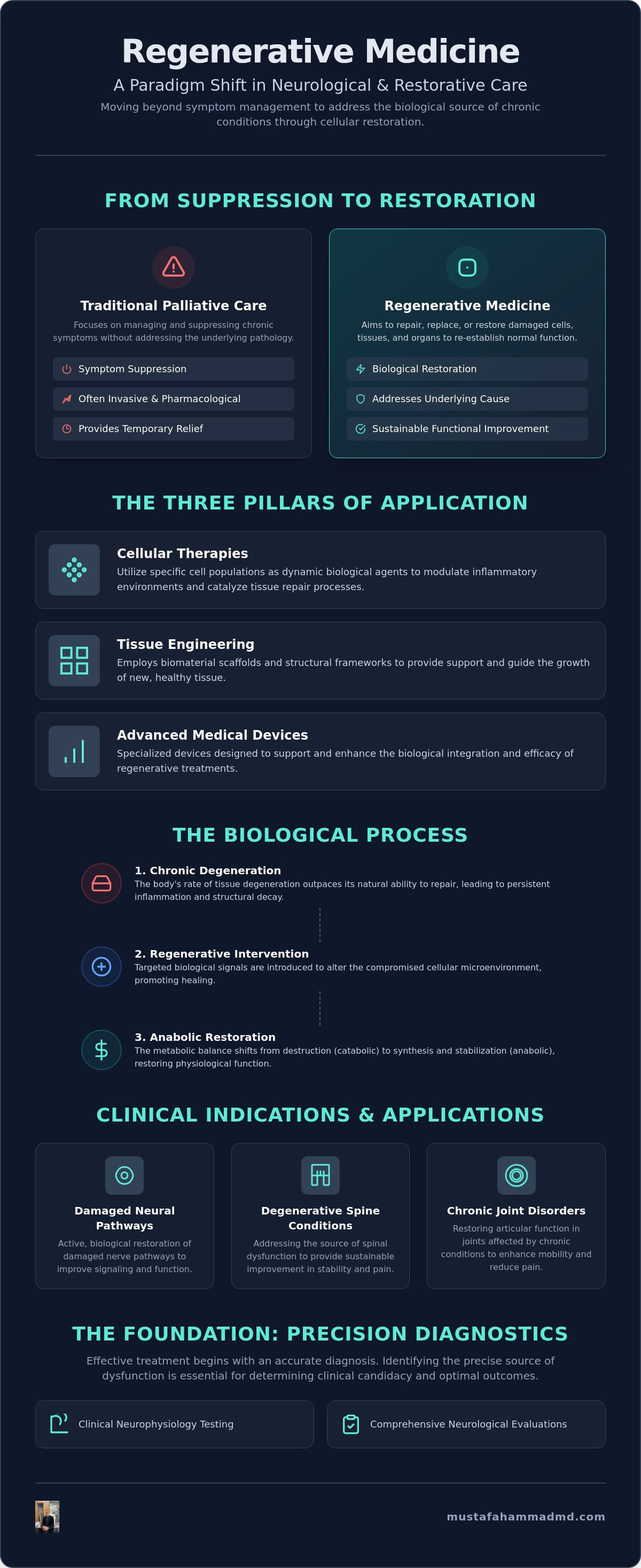
The clinical architecture of this field is built upon three foundational pillars: cellular therapies, which utilize specific cell populations to modulate inflammatory environments; tissue engineering, which employs structural frameworks to guide new growth; and advanced medical devices designed to support biological integration. For a broader contextual overview of these developments, one might ask, What is Regenerative Medicine? and how has it evolved from basic laboratory research into a cornerstone of specialized neurology? It's the synthesis of these three pillars that allows for a comprehensive approach to healing, ensuring that the biological requirements for tissue regeneration are met with precision and scientific rigor. This integrated strategy provides a framework for addressing the multifaceted nature of chronic degeneration.
The Biological Imperative of Tissue Restoration
Chronic neurological and musculoskeletal conditions are often characterized by a progressive pathophysiology where the rate of tissue degeneration significantly exceeds the body's natural compensatory mechanisms. In these compromised microenvironments, the absence of appropriate signaling molecules and the presence of inhibitory factors lead to a state of persistent inflammation and structural decay that traditional medicine often struggles to reverse. Clinical applications of regenerative medicine introduce specific biological signals that alter these cellular microenvironments, effectively shifting the metabolic balance away from catabolic destruction and toward anabolic tissue synthesis and stabilization. Regenerative medicine is a discipline that leverages autologous or synthetic materials to restore physiological function.
Historical Evolution from Research to Clinical Practice
The trajectory of this field began with rudimentary tissue grafting techniques and has matured into the sophisticated application of biotherapies that we see today, marking a transition from experimental theory to standardized clinical practice. This movement from academic laboratories to specialized outpatient clinics has been driven by a relentless commitment to rigorous clinical standards and evidence-based methodologies that prioritize patient outcomes. Modern protocols are no longer confined to the realm of theoretical research; they're precise medical interventions validated by extensive peer-reviewed data and comprehensive safety frameworks. This evolution ensures that the transition from bench to bedside maintains the highest tiers of professional validation, providing patients with access to established restorative options that bridge the gap between innovation and traditional excellence.
Primary Modalities: Cellular Therapies and Tissue Engineering
Within the clinical framework of regenerative medicine, cellular therapies function as dynamic biological agents capable of modulating systemic and localized inflammatory responses to facilitate tissue repair. These interventions aren't merely passive replacements; they act as catalytic elements that alter the metabolic trajectory of damaged neural and musculoskeletal structures. By introducing specific cell populations into compromised sites, clinicians can effectively shift the microenvironment from a state of chronic degradation to one of active biological synthesis. This transition is essential for patients who've reached the limits of traditional pharmacological management and require a more fundamental restorative approach.
Central to this orchestration are signaling molecules, or growth factors, which serve as the primary biochemical messengers that direct the complex stages of cellular proliferation and differentiation. These factors ensure that the regenerative process remains organized and physiologically appropriate, preventing the haphazard growth often seen in unmanaged healing. When selecting biological sources, the distinction between autologous and allogeneic materials is paramount for maintaining rigorous clinical safety profiles. Autologous sources, derived from the patient's own body, minimize the risk of immunological rejection and align with the FDA's 2026 criteria for minimal manipulation. Conversely, allogeneic products require exhaustive donor screening and documentation to adhere to the latest HCT/P regulatory frameworks, ensuring that patient safety remains the primary clinical objective.
The Mechanism of Cellular Signaling and Recruitment
The mechanism of cellular signaling relies heavily on the paracrine effect, where introduced cells secrete factors that recruit the body’s endogenous restorative resources to the injury site. This indirect recruitment often proves more significant for long-term tissue health than the direct action of the introduced cells themselves. Achieving therapeutic efficacy requires high-concentration delivery systems during interventional procedures to ensure that signaling thresholds are met within the target tissue. For patients seeking a specialized evaluation of these advanced modalities, a formal neurology consultation provides the necessary diagnostic foundation to determine the most appropriate biological pathway.
Biomaterials and the Microenvironment
The extracellular matrix (ECM) provides the essential structural architecture required to maintain tissue integrity and guide cellular behavior. In cases where the ECM is severely compromised, modern tissue engineering utilizes synthetic and natural scaffolds designed to mimic the body’s internal architecture, providing a temporary framework for new tissue growth. This intersection of genetics and engineering allows for the development of biomaterials that aren't just inert supports but active participants in the regenerative microenvironment. By utilizing scaffolds that mirror the physiological properties of native tissue, regenerative medicine protocols can more effectively support the complex requirements of neural and musculoskeletal restoration.
Regenerative Medicine vs. Traditional Interventional Pain Management
The clinical distinction between traditional interventional pain medicine and regenerative medicine lies primarily in the fundamental mechanism of action directed at the pathological site. Conventional interventional approaches often utilize corticosteroids or local anesthetics to achieve rapid anti-inflammatory suppression, effectively masking nociceptive signaling without addressing the underlying structural deficit. While these methods provide necessary temporary relief for acute exacerbations, they're inherently palliative and don't facilitate the biological restoration of compromised tissues. In contrast, restorative biological interventions prioritize the modulation of the cellular environment to stimulate endogenous repair mechanisms, moving beyond simple symptom management toward a goal of long-term functional improvement. This shift in focus is essential for patients who've experienced the limitations of cyclical, suppressive treatments.
One must also consider the long-term impact of these varying modalities on overall tissue health. Clinical evidence suggests that repeated exposure to high-dose corticosteroids can lead to catabolic sequelae, potentially contributing to the further degeneration of articular cartilage and tendinous structures. This creates a clinical paradox where the treatment intended to manage pain may inadvertently accelerate the progression of the underlying disease. Regenerative medicine avoids this degenerative cycle by utilizing anabolic signaling to support tissue integrity. Because these procedures are minimally invasive and typically performed under precise imaging guidance, they offer a favorable safety profile that bridges the gap between conservative management and more aggressive surgical options. This approach allows for the delivery of concentrated biological agents directly to the source of dysfunction with minimal disruption to surrounding healthy anatomy.
Palliative Care vs. Restorative Interventions
Differentiating between blocking pain signals and addressing the underlying biological cause of the pain is a critical step in a patient's clinical journey. Traditional palliative care focuses on interrupting the transmission of pain, whereas regenerative protocols aim to repair the damaged substrate that generates those signals. By restoring the physiological environment, these therapies can often delay or even prevent the need for major surgical intervention in patients with degenerative spine or joint disorders. Selecting the appropriate path requires a commitment to evidence-based methodologies that prioritize the preservation of biological function over the mere temporary reduction of discomfort.
Safety and Long-term Clinical Outcomes
When examining clinical data regarding the safety of autologous regenerative treatments, the risk profile is remarkably low due to the use of the patient's own biological material. This significantly reduces the risk of immunological complications or adverse reactions often associated with synthetic or foreign substances. Compared to the extensive recovery periods and potential complications of open neurosurgical procedures, regenerative interventions offer shorter recovery times and a more rapid return to daily activities. These patient-centered benefits, combined with the potential for sustained functional gains, represent a significant advancement in the specialized management of chronic neurological and musculoskeletal conditions.
Clinical Indications in Neurology and Spine Disorders
The application of regenerative medicine within the specialized fields of interventional neurology and spinal care represents a significant clinical advancement for patients suffering from recalcitrant degenerative conditions. While much of the public discourse surrounding this field often focuses on large-organ engineering, the most immediate and profound clinical impacts are often observed in the management of complex spinal pathologies and chronic articular dysfunction. These indications require a meticulous diagnostic approach to ensure that biological agents are delivered to tissues that still possess the structural capacity for restoration. Specialists utilize a rigorous set of criteria to determine candidacy, typically prioritizing patients who exhibit localized pathology without extensive systemic contraindications or end-stage anatomical collapse that would preclude a biological response. It's a precise matching of biological potential with clinical need.
Determining the appropriate timing for these interventions is as critical as the selection of the modality itself. Patients who've exhausted conservative measures but wish to avoid the risks associated with open neurosurgery often find that restorative protocols provide a viable middle ground. The objective is to intervene at a point where the biological substrate is still receptive to signaling, thereby optimizing the potential for sustained functional recovery. This specialized focus on the intersection of neurology and biological repair allows for a more nuanced treatment plan that addresses the specific mechanical and neurological drivers of a patient's disability.
Addressing Degenerative Disc and Joint Pathophysiology
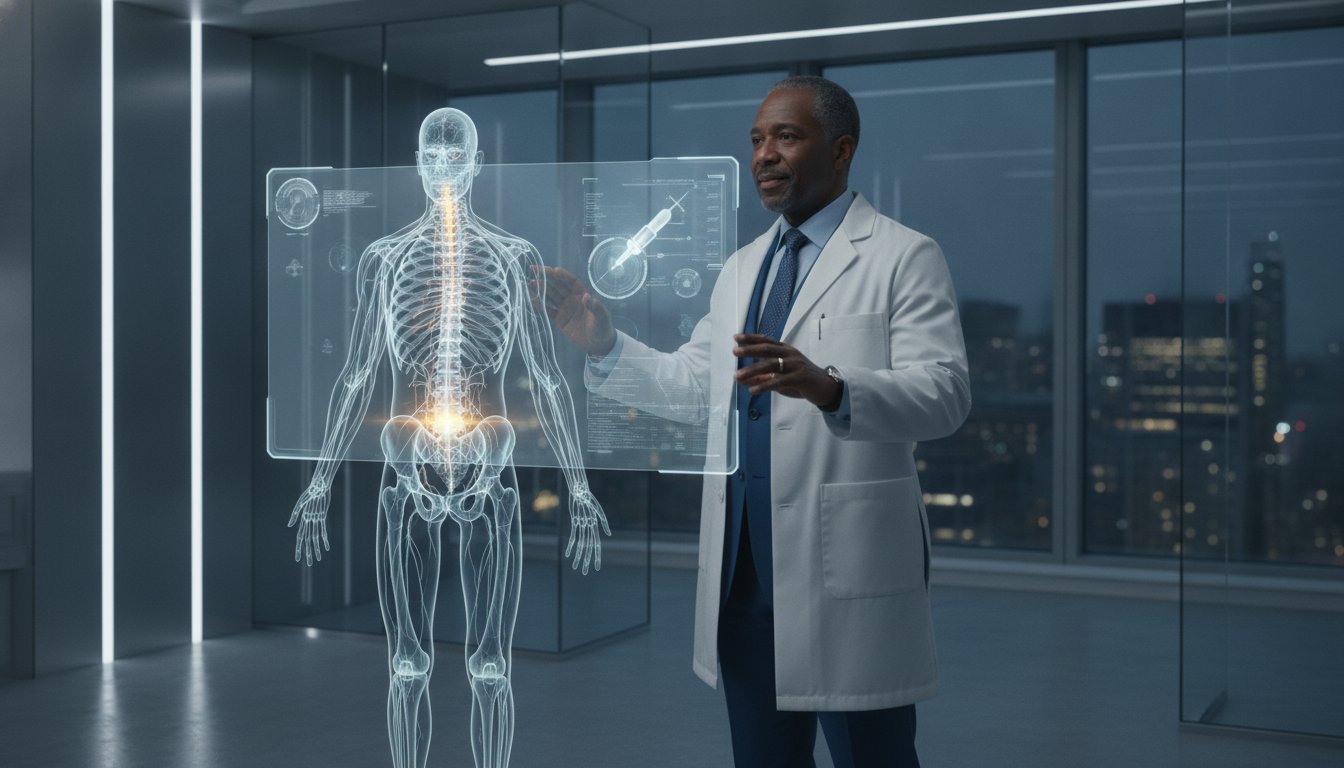
The pathophysiology of degenerative disc disease involves a progressive loss of proteoglycan content and hydration within the nucleus pulposus, leading to mechanical instability and nociceptive signaling. By introducing concentrated regenerative factors directly into the intervertebral disc microenvironment, clinicians can support the structural integrity of the disc and potentially arrest the degenerative cascade. Similarly, in the management of osteoarthritis, biological joint restoration focuses on modulating the intra-articular environment to preserve remaining hyaline cartilage and improve functional mobility. Early intervention remains a critical factor in these protocols; addressing the degenerative cycle before the onset of bone-on-bone friction significantly enhances the probability of a favorable clinical outcome. If you're seeking an authoritative evaluation for these conditions, you can learn more about our approach to regenerative medicine and how it integrates with precision neurological care.
Neurological Applications and Nerve Regeneration
Neurological applications of these therapies extend into the treatment of peripheral neuropathy and nerve-related injuries where traditional palliative care has reached its therapeutic ceiling. The clinical significance of nerve-specific growth factors lies in their ability to support axonal health and facilitate the restoration of sensory and motor function in damaged neural pathways. By targeting the perineural environment with biological signals, it's possible to influence the neuro-regenerative process and improve the quality of life for those suffering from chronic neuropathic pain. This approach requires a deep understanding of neuroanatomy and the complex signaling pathways that govern neural repair, ensuring that every intervention is grounded in academic rigor and clinical excellence.
The Hammad Center Approach: Integrating Precision Diagnostics
Drawing from over 21 years of international medical experience, our clinical methodology prioritizes a foundation of exhaustive diagnostic validation before any restorative intervention is initiated. It's not enough to simply identify a site of discomfort; a practitioner must understand the complex neurological environment and the specific pathophysiology that surrounds the lesion. This commitment to academic rigor ensures that every patient consultation is treated with the seriousness of a high-level medical inquiry, where trust is established through a display of extensive qualifications and a dedication to global standards of excellence. By maintaining this level of decorum, we bridge the gap between traditional clinical excellence and modern medical innovation, providing a narrative of medical expertise as a primary path to patient reassurance.
Within this framework, regenerative medicine isn't viewed as a standalone solution but rather as a precisely targeted component of a broader neurological strategy. Our protocols are developed through a relentless pursuit of knowledge and a commitment to the highest tiers of professional validation, ensuring that each treatment plan is grounded in evidence-based medicine rather than speculative theory. This scholarly approach is essential for navigating the complexities of restorative therapy, as it allows for the differentiation between general symptom management and the precise biological restoration of function. It is this meticulous attention to detail that characterizes our role as an authoritative specialist and a leading figure in the advancement of medical science; similarly, many practitioners seek specialized support from a mortgage broker for doctors UK to manage the unique financial demands of a life dedicated to medicine.
Diagnostic Precision and Neurophysiology
Clinical neurophysiology testing, specifically through the application of Electromyography (EMG) and Nerve Conduction Studies (NCS), serves as the cornerstone of our diagnostic process, ensuring that the source of dysfunction is identified with absolute precision. This level of diagnostic accuracy prevents the misapplication of regenerative therapies to areas that wouldn't benefit from biological signaling, thereby protecting the integrity of the clinical outcome. We also integrate sleep medicine and neurology into our evaluations, recognizing that total patient health is an interconnected system where restorative outcomes are influenced by systemic physiological states and recovery cycles. By adhering to the high standards established by the American Medical Institute, we maintain a lexicon of elite medical practice that prioritizes safety and efficacy in every interventional procedure.
A Distinguished Path to Restorative Health
The interdisciplinary collaboration between neurology, interventional pain medicine, and regenerative therapy allows for a comprehensive perspective that's rarely found in conventional clinics. This synergy ensures that every restorative pathway is optimized for the patient’s specific neurological profile, whether they're seeking a primary consultation or a second opinion for a complex, recalcitrant case. We encourage patients to seek an expert evaluation from Mustafa Hammad MD to determine the most appropriate restorative pathway, as his lifetime of elite education and international practice provides the necessary authority to guide these critical decisions. By choosing a path defined by meticulous, scholarly investigation, patients can move forward with the reassurance that their care is managed by Mustafa Hammad MD, a distinguished global expert dedicated to the highest standards of clinical excellence.
Advancing Toward a New Standard of Restorative Neurological Care
The integration of regenerative medicine into modern neurological practice marks a definitive departure from the historical limitations of symptom management, offering instead a scientifically rigorous pathway toward the restoration of physiological function. By prioritizing the biological microenvironment through cellular signaling and tissue engineering, clinicians can now address the underlying pathophysiology of degenerative spine and joint disorders with unprecedented precision. This transition from palliative suppression to active biological repair relies heavily on a foundation of expert diagnostic validation, including clinical neurophysiology testing, to ensure that restorative agents are delivered with the highest degree of anatomical accuracy. It's a sophisticated paradigm that demands an exhaustive understanding of both neuroanatomy and the latest advancements in biological science.
For those seeking an elevated standard of care, it's essential to partner with a specialist who possesses the academic depth and international experience required to navigate these complex modalities. Dr. Mustafa Hammad is Board-certified in Neurology and Interventional Pain Medicine and currently serves as the President of The American Medical Institute. With over 21 years of specialized medical experience, he provides the authoritative expertise necessary to bridge the gap between traditional excellence and modern innovation. We invite you to Request a Comprehensive Consultation for Restorative Neurological Care to determine the most appropriate clinical pathway for your recovery. Taking this step ensures your health is managed by a distinguished global expert dedicated to achieving the highest tiers of professional validation and patient outcomes. You don't have to accept chronic dysfunction when a restorative biological future is within reach.
Frequently Asked Questions
What is the primary difference between regenerative medicine and traditional pain management?
The fundamental distinction lies in the mechanism of action, where traditional interventional pain medicine typically utilizes corticosteroids to suppress inflammation, whereas regenerative medicine focuses on the biological restoration of damaged tissues. By facilitating the body's intrinsic repair mechanisms, restorative therapies move beyond the temporary masking of nociceptive signals to address the underlying structural deficits within the neural or musculoskeletal environment. It's a shift from palliative care to a restorative paradigm that prioritizes long-term functional integrity over temporary symptom suppression.
Is regenerative medicine considered an alternative to major spine surgery?
Regenerative protocols frequently serve as a sophisticated, minimally invasive alternative for patients who wish to avoid the risks and extensive recovery periods associated with open neurosurgery. While not every condition is suitable for biological intervention, many degenerative spine disorders can be managed by delivering concentrated growth factors directly to the intervertebral disc or facet joints. This approach can potentially delay or entirely preclude the need for more aggressive surgical procedures by stabilizing the biological substrate and restoring structural integrity to the compromised spinal segments.
How long does it typically take to observe clinical results from regenerative therapies?
Clinical results from restorative interventions are generally observed gradually, as the biological processes of cellular proliferation and tissue synthesis require several weeks to manifest as functional improvement. Unlike the rapid but temporary relief provided by traditional anti-inflammatory injections, the restorative trajectory is defined by a slow burn of physiological stabilization. Most patients begin to report gains in mobility and comfort within three to six months following the procedure, as the newly synthesized tissue integrates into the existing anatomical framework.
Are regenerative medicine procedures for joint and spine disorders safe?
Regenerative medicine procedures maintain a high safety profile, particularly when utilizing autologous materials derived from the patient's own body to eliminate the risk of immunological rejection. By adhering to rigorous clinical standards and the latest 2026 FDA regulatory frameworks for minimal manipulation, specialists ensure that these interventional procedures provide a secure option for managing chronic joint and spine pathologies. This clinical safety is further enhanced by the use of precise imaging guidance, which ensures that biological agents are delivered exactly where they're needed.
What role does clinical neurophysiology testing play in regenerative medicine?
Clinical neurophysiology testing, including Electromyography (EMG) and Nerve Conduction Studies (NCS), is essential for ensuring diagnostic precision prior to the initiation of any restorative protocol. By accurately identifying the specific source of neural dysfunction and localizing the pathology, these tests prevent the misapplication of biological agents. This diagnostic rigor ensures that the therapeutic intervention is directed toward the tissue with the highest potential for functional recovery, providing a level of accuracy that's foundational to our clinical methodology.
Who is an ideal candidate for regenerative neurological treatments?
An ideal candidate is typically an individual suffering from localized degenerative spine or joint disorders who's not found sufficient relief through conservative measures but maintains enough structural integrity to support biological repair. Candidates must undergo a comprehensive neurological evaluation to ensure that their specific pathology aligns with the mechanisms of restorative signaling. Those with end-stage anatomical collapse or extensive systemic contraindications may require alternative clinical strategies, making this initial screening process critical for achieving successful long-term outcomes.
Does regenerative medicine address the symptoms or the underlying cause of chronic pain?
Regenerative medicine specifically targets the underlying biological cause of chronic pain by addressing the structural and metabolic deficits within the compromised tissue microenvironment. While symptom reduction is a primary clinical objective, it's achieved through the active restoration of damaged substrates and the modulation of inflammatory pathways. This approach differs from the simple pharmacological interruption of pain transmission, as it seeks to repair the substrate that generates the nociceptive signals, leading to more sustainable functional improvement.