

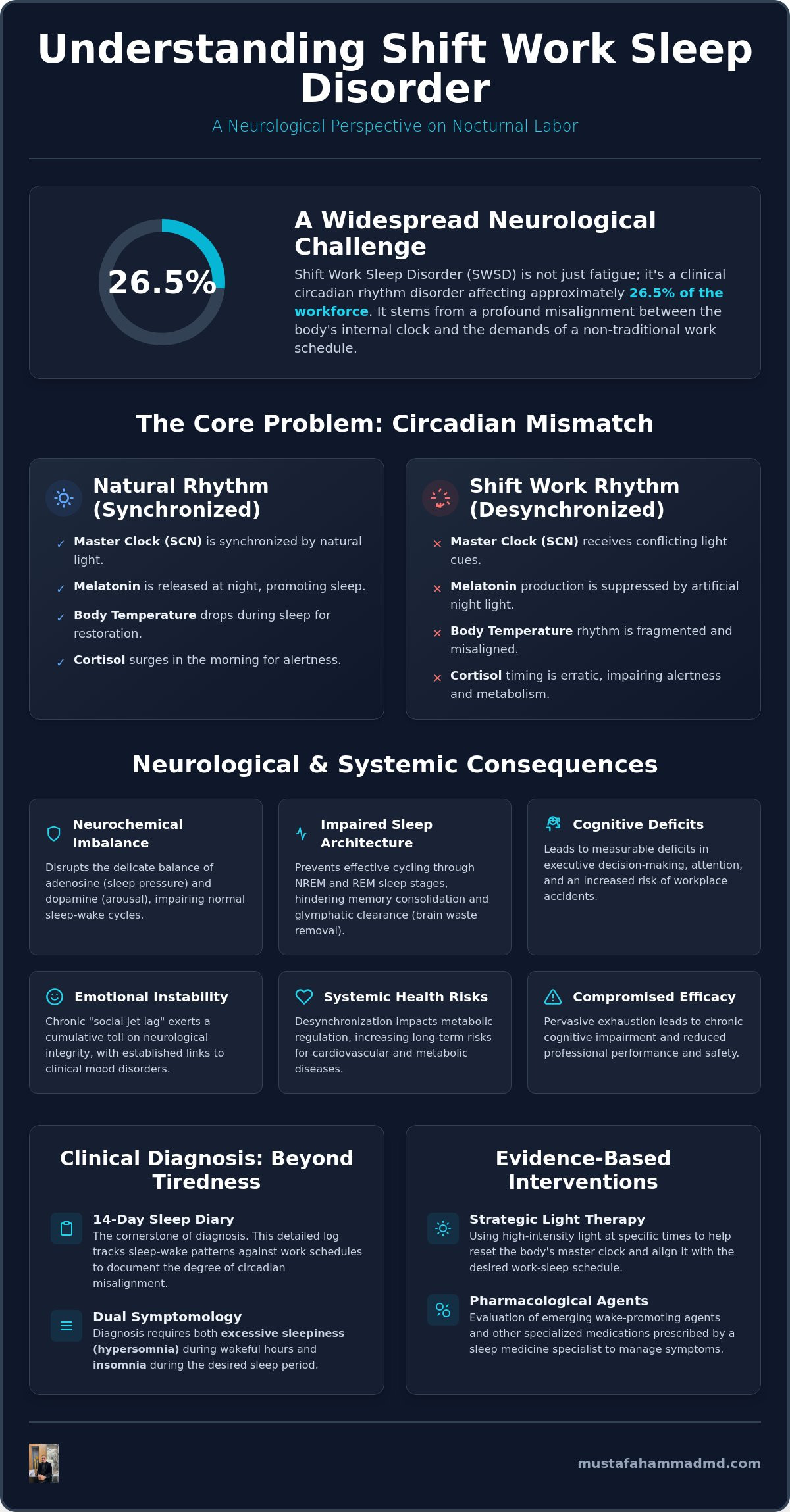
While many perceive nocturnal labor as a mere lifestyle adjustment, clinical research indicates that shift work sleep disorder affects approximately 26.5% of the workforce, manifesting as a profound neurological misalignment between the endogenous circadian pacemaker and the required sleep-wake schedule. You likely recognize the pervasive exhaustion that transcends typical tiredness, often resulting in chronic cognitive impairment and an increased risk of workplace accidents that compromise professional efficacy. This article provides a comprehensive clinical examination of the underlying pathophysiology, the rigor of modern diagnostic criteria, and the specialized neurological interventions required to manage this complex condition.
It's understandable to feel frustrated by the emotional instability and persistent fatigue that arise when your internal biological clock is perpetually out of sync with your professional obligations, creating a state of chronic circadian misalignment. We promise to provide a sophisticated understanding of the biological mechanisms driving your exhaustion, alongside a clear pathway for identifying the clinical diagnostic criteria required for formal assessment by an authoritative specialist. We'll analyze the 2026 clinical practice guidelines, evaluate the efficacy of emerging wake-promoting agents, and detail the specialized Sleep Medicine Services that facilitate a return to physiological harmony.
Key Takeaways
- Examine the neurological mechanisms of the suprachiasmatic nucleus to understand how nocturnal labor disrupts the biological master clock's regulatory functions.
- Identify the rigorous clinical criteria required to diagnose shift work sleep disorder, emphasizing the role of 14-day sleep diaries in documenting circadian misalignment.
- Analyze the cumulative systemic impact of chronic sleep deprivation on executive decision-making and its established neurological links to clinical mood disorders.
- Evaluate evidence-based therapeutic interventions, including the strategic application of high-intensity light therapy and the use of specialized pharmacological agents.
- Discover the diagnostic advantages of seeking specialized neurological care to bridge the gap between general sleep hygiene and advanced clinical neurophysiology.
Understanding the Pathophysiology of Circadian Rhythm Disruption
Shift work sleep disorder (SWSD) is formally classified as a primary circadian rhythm sleep-wake disorder, characterized by a persistent and clinically significant pattern of sleep interruption that arises from a fundamental misalignment between the endogenous biological clock and the external environment. This condition represents a profound neurological challenge rather than a simple lifestyle grievance, as it's rooted in the complex dysfunction of the suprachiasmatic nucleus (SCN). Located within the hypothalamus, the SCN serves as the body’s master pacemaker, utilizing environmental cues to coordinate a myriad of physiological processes, including the precisely timed secretion of melatonin from the pineal gland. When clinicians observe patients exposed to high-intensity artificial light during nocturnal labor, they identify a suppression of melatonin production that creates a "circadian mismatch," effectively preventing the brain from initiating the restorative processes required for health.
The Biological Master Clock and Environmental Zeitgebers
In the architecture of human biology, light serves as the primary "zeitgeber," or time-giver, which synchronizes internal rhythms to the 24-hour solar cycle. For individuals forced into non-traditional work hours, the resulting misalignment between the sleep-wake cycle and the external environment triggers a systemic disruption that extends far beyond subjective fatigue. This desynchronization profoundly alters the rhythmic oscillation of core body temperature, which must typically decline to facilitate the onset of deep sleep. Furthermore, the standardized morning surge of cortisol, which is vital for metabolic regulation and cognitive alertness, becomes fragmented and poorly timed, leaving the physiological systems in a state of perpetual conflict with the individual's required professional schedule.
Neurological Consequences of Desynchronization
The immediate neurological impact of this desynchronization involves a critical imbalance of neurochemical signaling, specifically affecting the homeostasis of adenosine and dopamine. Under normal physiological conditions, adenosine accumulates throughout wakefulness to build sleep pressure, while dopamine facilitates the arousal necessary for executive tasks; however, the irregular schedules inherent in shift work sleep disorder disrupt these delicate mechanisms. This impairment prevents the brain from effectively transitioning through the essential stages of non-rapid eye movement (NREM) and rapid eye movement (REM) sleep, which are critical for both memory consolidation and glymphatic clearance. Over time, the phenomenon of "social jet lag" exerts a cumulative toll on neurological integrity, manifesting as measurable deficits in executive decision-making and emotional stability that cannot be mitigated by inconsistent periods of recovery.
Clinical Presentation and the Necessity of Diagnostic Rigor
The clinical identification of shift work sleep disorder necessitates a rigorous evaluation that extends beyond a simple report of tiredness. It focuses on the dual presence of excessive sleepiness, or hypersomnia, during wakeful hours and persistent insomnia during the designated sleep period. To achieve diagnostic clarity, clinicians rely on the "sleep diary," a detailed 14-day log that tracks the patient's sleep-wake patterns in direct relation to their work schedule. This longitudinal data is indispensable for visualizing the degree of circadian misalignment and confirming that symptoms aren't the result of poor sleep hygiene or temporary stressors. A thorough understanding of Shift Work Disorder symptoms and diagnosis is foundational for any specialist attempting to differentiate this condition from generalized fatigue or secondary sleep disturbances.
The Role of Polysomnography and MSLT
In many cases, the subjective experience of exhaustion isn't enough to secure a definitive diagnosis, making objective clinical neurophysiology testing a necessity. Polysomnography (PSG) is utilized as a primary screening tool to rule out obstructive sleep apnea or other intrinsic sleep pathologies that may mimic the symptoms of circadian disruption. If the PSG results are inconclusive or suggest secondary issues, the Multiple Sleep Latency Test (MSLT) is employed during the day to quantify the patient's physiological sleep drive. The MSLT is a diagnostic tool used to measure how quickly a patient falls asleep in a controlled environment. These objective metrics allow for a high level of diagnostic rigor, ensuring that the treatment strategy is based on physiological evidence rather than anecdotal reports. For those seeking this level of precision, a Neurology Consultation provides the necessary specialized oversight.
Differential Diagnosis in a Neurological Context
A sophisticated clinical perspective is required to differentiate shift work sleep disorder from conditions like restless legs syndrome or the cognitive decline associated with chronic sleep deprivation. It's vital to assess the "shift work phenotype" through a comprehensive patient history that accounts for both neurological and motor function. Comorbidities such as clinical depression or anxiety often complicate the presentation, requiring a specialist who can untangle the neurological cause from the psychological effect. This level of scrutiny ensures that patients receive an accurate diagnosis, preventing the mismanagement of a condition that has profound implications for long-term health and workplace safety. By integrating detailed patient observations with advanced diagnostics, we can offer a definitive path toward clinical resolution.
Long-term Neurological and Systemic Complications of Chronic SWSD
Chronic exposure to shift work sleep disorder precipitates a cascade of neurological and systemic complications that extend far beyond the immediate sensation of lethargy, representing a significant threat to long-term physiological integrity. One of the most concerning aspects involves the impairment of the glymphatic system, which is a macroscopic waste clearance pathway that utilizes perivascular channels to eliminate neurotoxic metabolites, such as amyloid-beta, during periods of deep, restorative sleep. When circadian rhythms are persistently disrupted, the brain’s ability to perform this essential metabolic "housekeeping" is severely compromised, potentially accelerating neurodegenerative processes and contributing to a higher risk of cognitive decline in later life. This neurological burden is often accompanied by a profound dysregulation of the hypothalamic-pituitary-adrenal axis, which further exacerbates the body's stress response and contributes to a state of chronic systemic vulnerability.
Cognitive Erosion and Workplace Safety
The neurobiology of persistent sleep deprivation reveals the emergence of "micro-sleeps," which are brief, involuntary lapses into unconsciousness that occur without warning, posing catastrophic risks in high-stakes professional environments like medicine or heavy industry. Because chronic sleep debt impairs neuroplasticity and the consolidation of memory within the hippocampus, professionals often experience a measurable erosion of executive decision-making capabilities and an inability to process complex information rapidly. It's well-documented that the cognitive impairment resulting from prolonged wakefulness can rival that of legal alcohol intoxication, significantly increasing the frequency of errors in judgment, motor coordination, and situational awareness that are vital for workplace safety.
The interplay between circadian misalignment and psychiatric health is equally significant, as the disruption of the master biological clock frequently triggers dysregulation in the serotonergic and dopaminergic pathways. This neurochemical instability often manifests as clinical depression or generalized anxiety, creating a complex clinical profile where sleep disturbances and mood disorders reinforce one another in a debilitating cycle. Beyond the central nervous system, the systemic burden of chronic shift work sleep disorder involves profound cardiovascular and metabolic stressors that require a high degree of clinical oversight.
To support the complex administrative needs of clinics providing this level of oversight, HPC Healthcare Partners provides resources to learn more about specialized medical and mental health billing services.
Systemic Health and the Circadian-Immune Axis
Research into the health and safety risks of shift work underscores a critical suppression of the immune response, driven by elevated systemic inflammation and a reduction in natural killer cell activity. This chronic inflammatory state is a known precursor to cardiovascular morbidity, hypertension, and metabolic dysfunction, including a heightened risk of developing Type 2 diabetes due to impaired glucose tolerance and altered insulin sensitivity. A board-certified neurologist plays a vital role in managing the holistic health of the patient, integrating sleep medicine with a deep understanding of these systemic interconnections to mitigate the long-term health risks associated with a non-traditional work schedule.
Evidence-Based Therapeutic Interventions and Management
The clinical management of shift work sleep disorder requires a multifaceted approach that transcends basic sleep hygiene, prioritizing evidence-based interventions that target the underlying circadian misalignment. Strategic light therapy stands as a cornerstone of this clinical framework, utilizing high-intensity light exposure of approximately 10,000 lux to facilitate phase-shifting of the biological master clock. By exposing the patient to specific light frequencies during the early hours of a night shift, clinicians can effectively delay the circadian rhythm, thereby improving alertness during work hours. Chronotherapy complements this by implementing a gradual, methodical adjustment of sleep-wake times, allowing the patient’s physiology to adapt to shifting requirements without the acute shock of sudden schedule changes. These protocols are often paired with planned napping, where short, 20-minute periods of rest are strategically timed to optimize neurocognitive performance without inducing sleep inertia.
Pharmacotherapy and Wake-Promoting Agents
Pharmacological management is often necessary to bridge the gap between biological capacity and professional demands, particularly through the use of wake-promoting agents like modafinil or armodafinil. These medications are specifically indicated for the treatment of excessive sleepiness associated with shift work, providing a critical safety net for professionals in high-stakes environments. Exogenous melatonin and melatonin receptor agonists are utilized to facilitate rapid sleep onset during the day, addressing the insomnia component of the disorder by signaling the brain that the sleep period has commenced despite external daylight. The efficacy of wake-promoting agents in enhancing alertness without the systemic jitters of traditional stimulants makes them a preferred choice for clinical management. When these medications are integrated into a broader therapeutic plan, they offer a significant reduction in the cognitive deficits typically observed in sleep-disordered populations.
Environmental and Behavioral Optimization
To ensure the success of pharmacological and light-based therapies, patients must adhere to rigorous environmental standards during their designated sleep periods. This involves the creation of a "dark-period" environment that mimics nocturnal conditions, utilizing blackout technology and precise temperature control to facilitate deep sleep. Behavioral optimization includes the strategic use of blue-light filtering eyewear during the transition from work to home to prevent unwanted suppression of endogenous melatonin. Strategic caffeine utilization, when timed to avoid interference with the subsequent sleep period, further supports this objective. It's essential that these interventions are supervised by a specialist who can adjust the timing and dosage based on the patient's unique shift schedule. For individuals struggling to implement these complex protocols, accessing specialized Sleep Medicine Services is an essential step toward reclaiming physiological stability.
The Role of Specialized Neurological Consultation
While primary care physicians provide an essential foundation for general health maintenance, the complex management of shift work sleep disorder often necessitates the intervention of a board-certified neurologist who possesses a deeper understanding of the central nervous system's role in circadian regulation. This specialized perspective is vital because sleep is not merely a period of inactivity but a highly regulated neurological process involving intricate signaling pathways within the brain's master clock. By integrating sleep medicine with the precision of clinical neurophysiology testing, a neurologist can distinguish between primary circadian disruptions and secondary neurological pathologies that might mimic similar symptoms. This level of diagnostic rigor is particularly critical for professionals whose roles demand peak cognitive performance and where an inaccurate assessment could lead to significant occupational risks.
For patients experiencing treatment-resistant symptoms, the value of a Second Opinion from a distinguished specialist isn't just a preference but a clinical necessity, as it provides a fresh perspective on the efficacy of existing pharmacological and behavioral protocols. A comprehensive neurology consultation allows for the evaluation of subtle cognitive and motor impairments that may be exacerbated by chronic sleep debt, ensuring that the therapeutic approach is both holistic and scientifically sound. This process often involves a meticulous review of the patient's sleep architecture and metabolic profile to identify underlying barriers to restorative rest. By seeking an authoritative consultant, patients can access a higher tier of professional validation and a commitment to the most advanced evidence-based methodologies currently available in modern medicine.
Expertise in Sleep Medicine and Interventional Care
Mustafa Hammad MD serves as a prestigious hub for advanced neurological and sleep diagnostics, characterized by a relentless pursuit of clinical excellence and academic rigor. With a narrative of over 21 years of experience in managing complex neurological pathologies, the practice offers patients a wealth of global expertise that's rarely found in general practice settings. Every patient journey begins with the development of personalized clinical pathways, which are meticulously tailored to the specific demands of their professional life and the unique constraints of their shift schedule. This approach ensures that interventions, whether they involve sophisticated chronotherapy or specialized Sleep Medicine Services, are aligned with the patient's biological capacity and career obligations.
Accessing National Specialized Care
Recognizing the geographical and temporal barriers that many shift workers face, Mustafa Hammad MD provides Tele-medicine Consultations to ensure that elite neurological expertise is accessible nationally. This modern clinical innovation allows patients across the United States to consult with an authoritative specialist without the need for extensive travel, facilitating a steady and thorough diagnostic process. To prepare for a comprehensive sleep evaluation, patients should compile a complete history of their work rotations, previous pharmacological interventions, and documented sleep-wake patterns. Engaging in this high-level clinical dialogue is the first step toward mitigating the long-term systemic risks of circadian misalignment. For those ready to address their condition with the highest standard of medical care, it's time to Schedule a comprehensive neurological consultation for sleep optimization and begin the path toward physiological restoration.
Advancing Toward Circadian Restoration and Clinical Stability
Managing the complex neurological landscape of shift work sleep disorder requires a fundamental transition from rudimentary sleep hygiene toward a sophisticated, evidence-based clinical framework. Through a deep understanding of the suprachiasmatic nucleus and the utilization of rigorous diagnostic tools such as polysomnography and clinical neurophysiology, patients can move beyond subjective exhaustion toward measurable physiological recovery. It's essential to recognize that chronic circadian misalignment isn't merely a byproduct of a demanding professional life but a systemic challenge that demands authoritative specialist intervention to mitigate long-term cardiovascular and neurodegenerative risks.
By drawing upon over 21 years of clinical experience and a dual board certification in Neurology and Sleep Medicine, Mustafa Hammad MD provides the diagnostic precision and academic rigor required for treatment-resistant cases. The practice offers national tele-medicine availability, allowing individuals across the country to access elite specialist second opinions and personalized clinical pathways tailored to their unique professional demands. We invite you to Request a Specialized Neurological Consultation for Sleep Medicine to optimize your cognitive performance and restore your biological harmony. Achieving restorative health is a meticulous process, but with the right expertise, physiological stability is entirely within reach.
Frequently Asked Questions
What is the diagnostic criteria for Shift Work Sleep Disorder?
The formal diagnosis of shift work sleep disorder requires the presence of insomnia or excessive sleepiness that persists for at least three months in direct association with a work schedule overlapping the traditional sleep period. Clinicians utilize the International Classification of Sleep Disorders, Third Edition (ICSD-3) to confirm that these symptoms result in a reduction of total sleep time. This evaluation is typically supported by a 14-day sleep diary or actigraphy to document the specific pattern of circadian misalignment.
Can SWSD lead to permanent neurological damage if left untreated?
Chronic circadian disruption is clinically linked to neurodegenerative processes through the persistent impairment of glymphatic clearance, which is the brain's mechanism for eliminating neurotoxic metabolites like amyloid-beta. While the term "permanent damage" requires specific longitudinal validation, untreated sleep debt is a known precursor to accelerated cognitive erosion and long-term deficits in executive function. These risks underscore the necessity of specialist intervention to maintain neurological integrity and physiological resilience over a professional lifetime.
How does a Multiple Sleep Latency Test (MSLT) help in diagnosing sleep disorders?
The Multiple Sleep Latency Test serves as a gold standard in clinical neurophysiology by providing an objective measure of a patient’s physiological sleep propensity in a controlled environment. By monitoring several nap opportunities throughout the day, the test quantifies the speed of sleep onset and identifies the presence of rapid eye movement (REM) sleep. This data allows specialists to differentiate between generalized fatigue and profound hypersomnia, ensuring a high degree of diagnostic precision for complex cases.
Is medication necessary for managing Shift Work Sleep Disorder?
Pharmacological intervention isn't always mandatory but is frequently indicated for moderate to severe cases where behavioral strategies alone fail to mitigate cognitive impairment. Wake-promoting agents like modafinil or armodafinil provide a critical safety mechanism for enhancing alertness during nocturnal labor without the systemic side effects of traditional stimulants. Specialists often combine these with melatonin receptor agonists to facilitate daytime sleep onset, creating a comprehensive pharmacological bridge that aligns biological capacity with professional demands.
What are the most effective light therapy protocols for night shift workers?
Strategic exposure to high-intensity light, ideally 10,000 lux, during the initial hours of a night shift is the most effective protocol for facilitating a circadian phase delay. This intervention suppresses melatonin production at the master clock level, thereby shifting the period of peak alertness to align with work requirements. Conversely, the use of blue-light filtering eyewear during the morning commute is essential to prevent unwanted morning light from prematurely resetting the biological pacemaker before the daytime sleep period.
How does Shift Work Sleep Disorder differ from regular insomnia?
Shift work sleep disorder is categorized as a primary circadian rhythm sleep-wake disorder, meaning the underlying cause is an external misalignment between the internal biological clock and the environment. Regular insomnia often stems from psychological hyperarousal or physiological factors that are independent of a patient’s work schedule or external timing cues. While both conditions share symptoms of non-restorative sleep, SWSD requires specialized chronotherapeutic interventions that specifically target the suprachiasmatic nucleus rather than generalized sedative therapy.
Can a neurologist help with sleep issues related to non-traditional work hours?
A board-certified neurologist offers a superior level of expertise by evaluating sleep through the lens of neurotransmitter balance and the brain's regulatory master pacemaker. Specialized Neurology Consultations provide access to advanced Clinical Neurophysiology Testing, which is vital for untangling the complex relationship between sleep architecture and cognitive motor function. This specialized oversight ensures that treatment plans address the neurological root of the disorder rather than merely masking the symptoms of exhaustion.
What role does regenerative medicine play in neurological health and recovery?
Regenerative medicine focuses on the restoration of cellular homeostasis and the enhancement of physiological resilience, which supports the brain's ability to recover from chronic stressors like sleep deprivation. While it isn't a primary treatment for the timing of sleep cycles, these therapies can improve the overall restorative capacity of the nervous system. By integrating Sleep Medicine Services with regenerative principles, specialists aim to mitigate the systemic burden of chronic circadian disruption and promote long-term neurological health.